Tampilkan postingan dengan label tradition. Tampilkan semua postingan
Senin, 08 April 2013
artifacts
,
boat
,
boat building
,
culture
,
family fun
,
fishermen
,
heritage
,
historical sites
,
Japanese
,
museums
,
park
,
tradition
Tidak ada komentar
A VISIT TO NIKKEI PLACE AND MUSEUM

It's taken me a long time to make a point to visit the National Nikkei Museum and Heritage Centre. I used to post regular program notices for them when I wrote for Planet Eye Traveler (The Vancouver Guide) but as many times as I'd intended to take in some of their exhibits or just pass by to say hello, I didn't get around to it.

Last week, however, I needed to stop in to pick up a gift packet for the BC Travel Writer's gala in May. Once I got there, I was more than sorry I'd neglected to go sooner.
The multi-use facility houses the National Nikkei Heritage Centre and the Japanese Canadian National Museum. It's located at the corner of Sperling and Kingsway and easy to reach by public transit if you don't have a car.
The Centre promotes understanding and appreciation of the Japanese Canadian culture and heritage and the contribution of Japanese Canadians to our Canadian society. They offer many programs and special events including art exhibits, a speaker's series, bazaars and many other problems both for youth and elders included. There's art classes, folk dance workshops, exercise groups such as yoga, flower arranging and even a course in the traditional incense ceremony.

When I arrived at the Centre I was first impressed by the lovely gardens that surround the building. The cherry blossoms were all in bloom which seemed appropriate. The building itself is impressive and much larger than I'd expected.


I only stayed a short while and mainly visited the museum on the ground floor where there is an exhibit of Ryoshi: Nikkei fishing on the BC Coast. (It runs until May 19,2013). The admission is by donation. It displays the fisherman's life from the bustling docks of Steveston to the remote inlets on the northern Coast. For many years Japanese Canadians have made a unique contribution to fishing in BC both before and after the war.


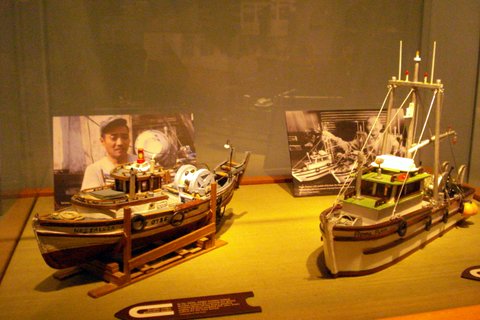
Upstairs in the museum there is an exhibit of Taiken: Japanese Canadians Since 1877. It's an ongoing exhibit so I'll have to go back and take a look. It deals with the first arrivals of Nissei in 1877 and the hardships of the early pioneers and struggles during the war years when the Japanese of the Coast were interned and their properties confiscated.


Don't pass up this interesting Museum and Cultural Centre. It's open every day but Monday.
Check their website for more information on programs and exhibits.
www.nikkeiplace.org

Selasa, 20 Maret 2012
CELEBRATING SPRING EQUINOX, THE PERSIAN NO-ROOZ NEW YEAR

For Persians, the first day of Spring, March 21, is the celebration of No-rooz (Nowruz) "A New Day". This day is the Equinox when the sun is observed directly over the equator and sunlight is divided evenly between the north and south hemispheres. This is the first day of the year in the Iranian calendar. It began as a Zoroastrian holiday and has significance for modern Iranians, but it's also celebrated in parts of South Asia as well. No-rooz is believed to have been started by Zoroaster himself, although there is no date of origin.

Symbol of Zoroaster
It is also a holy day for Sufis, Ishmalis and adherents of the Baha'i faith. The Jewish feast of Purim is probably adopted from the Persian New Year. It was celebrated as far back as the Achaemednids dynasty (598-330 BC) when Kings from different nations came to bring gifts to the King of Kings (Shahanshah) of Persia. Following the Iranian Revolution, the Islamic regime of Iran tried to suppress No-rooz. The Ayatollahs considered it to be a pagan holiday. During the reign of the Taliban it was also banned in Afghanistan.


At the No-rooz celebration I attended on Sunday, there were many tables set up with traditional foods and items. The school gym where it was held was crowded with people greeting each other with hugs and kisses, everyone in a happy New Years spirit.
A calligraphy artist was writing people's names in Parsi so I asked if he could write mine too.


"Ruth" (read from the right)

And belly dancers!


When I was asked by friends why there were belly dancers when in Iran women must were burqas, the reason is that before the Ayatollahs regime, Iranian women had freedoms similar to ours. When I watched these beautiful women dance I couldn't help but remember how during Alexander the Great's time, the Soghdian princess, Roxana, had danced for him. It's easy to see how he was so captivated that he married her!

The celebration of No-rooz is often centered on fire and part of the rituals of No-rooz is to leap over a bonfire. This is still practiced as part of the No-rooz festivities. This is a purification rite. People young and old leap over fires with songs of merriment. Translated,the traditional greeting they chant is "I will give you my yellow color (sign of sickness) and you give me your fiery red color (sign of healthiness).
Langganan:
Postingan
(
Atom
)